CALL: 1 (416) 586 3649



While the energy conservation measures established by the bipartisan Energy Independence and Security Act in the United States and the federal government in Canada were both passed in 2007, Canada has fallen behind in their execution. The mandates were the same: to improve energy consumption and reduce greenhouse gases. The strategy was the same: a slow, multi-year phase out of lamps that do not meet efficiency requirements. So what happened in Canada?
Managing Editor at BetaKit Joseph Czikk discusses Leapfrog Lighting’s special focus on quality of light.
To view the article, click here.


The California Energy Commission (CEC) set out to determine the level of performance necessary for an LED light bulb to meet or exceed customer expectations for residential lighting (referring only to lamps that can directly replace incandescent lamps).
After reading the Voluntary California Quality Light-Emitting Diode (LED) Lamp Specification document, I conclude that the overall goal seems mixed—some might even say contradictory.
Intelligent lighting control systems are widely used in commercial and industrial buildings to help achieve significant energy savings by preventing energy waste (or to comply with building codes or energy conservation programs). The networked systems generally allow a single user to control a single light or group of lights from one central system. In more sophisticated systems, control software allows for “logic statements” (for example, if-this-than-that) and varying levels of automation, in order to increase the amount of intelligence that goes into lighting control.
Lighting control systems do not simply turn lights on or off at scheduled times.

As a newly minted member of the Illumination Engineering Society (IES), I was curious to learn about the history of the organization: When did it begin? Who started it? For what reason? Are the topics of debate as relevant today as they were then?
The IES was founded in 1906 in New York City, where it is still headquartered today. The first elected President was a man named L.B Marks. Marks’ inaugural address two months after the organization launched provides great insight into why the organization was formed (part of the Inaugural Address of President L.B Marks is available on the IES website).

According to Marks, the Society was formed out of a keen interest for the advancement of the science and art of illumination. In his address, one can see several themes that are still relevant today:
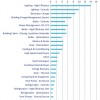
Last month, EEVS and Bloomberg New Energy Finance released their annual energy efficiency trends report, examining the state of the (mainly) UK energy efficiency market. These trends and developments indicate that of the 25 energy saving technologies and services provided by suppliers over the past year—which garnered 1516 projects valued at 84 million pounds—high-efficiency lighting and lighting controls were the most commissioned technology.
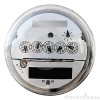
Holland Board of Public Works Vice President Justin Lamb recently remarked that retrofitting to LEDs “might not actually lower a business’s electric bill”.
Can this be true?
Yes and no. The context of this statement matters.
COPYRIGHT © 2016 LEAPFROGLIGHTING



