Last month, EEVS and Bloomberg New Energy Finance released their annual energy efficiency trends report, examining the state of the (mainly) UK energy efficiency market. These trends and developments indicate that of the 25 energy saving technologies and services provided by suppliers over the past year—which garnered 1516 projects valued at 84 million pounds—high-efficiency lighting and lighting controls were the most commissioned technology.

Source: Energy Efficiency Trends Annual Report 2012/13
The report determined that this trend will continue into the future. This is obviously great news for those in the LED lighting industry—especially if these results are mirrored in the North American market (and based on conversations with energy efficiency auditors in the US and Canada, we believe it is). But not all is good news. Here are a few highlights of the good, the bad, and the ugly:
The good
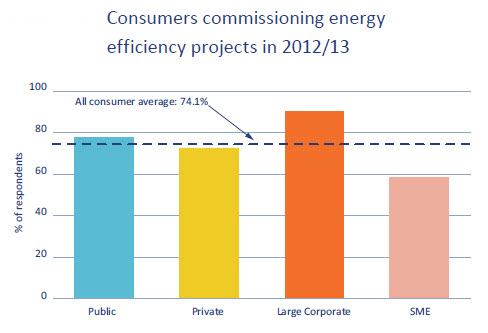
- Large corporations are leading the way with 9 out of 10 having commissioned energy efficient technologies. This is good news, as it serves to have a big impact on energy use.
- Consumers are looking for ROI within 5 years (less than 3 years for small and medium enterprises). This goal is realistic and achievable, so we believe consumer’s expectations are set accordingly. This can only serve to assist those in the lighting industry.
- More than 7 out of 10 energy efficient projects were funded in-house. This can indicate a healthy economy, more affordable prices of energy efficient technologies, or a shift in mindset regarding the importance of reducing energy use. Either way, it’s good.
- Suppliers report stable or growing orders.
The bad
- Small and medium enterprises (SMEs) are lagging behind in commissioning energy-efficient technologies (6 out of 10 compared with industry-wide figure of 74%). The study indicates no stand out reasons why any sector—including SME’s—did not undertake energy efficiency this year. This certainly makes the sales process more difficult for suppliers.
Source: Energy Efficiency Trends Annual Report 2012/13
- 7 out of 10 consumers did not measure the performance of the energy-efficient solution against a recognized standard (such as IPMVP). Without being able to reliably measure value for money, further improvements or future enhancements may not receive funding.
- Suppliers report stable pricing. While generally any prices not going upwards is good, we place this under the “bad” category, as one of the major complaints of consumers regarding lighting (apart from light quality) is the high cost of LED lighting in comparison to other lighting technologies. Prices must come down.
The ugly
- Only 1 in 10 projects being funded by third-party finance. This might indicate the failure of the UK Green Deal within the non-domestic sector.
- Suppliers are not impressed with the government’s energy efficiency policies and management, with 52% rating them as “ineffective” or “very ineffective”.
Overall, the study indicates a steady market for energy efficiency technologies, with a promising rise in the area of lighting commissions. If large corporation continue to lead the way and act as role models for operating energy efficiently, SMEs could follow. The cost of energy efficient technologies must drop to increase adoption and project performance must be measured against recognized standards to assist with getting buy-in from senior management for future projects.
How do you feel about these trends in the UK? Do you feel it is similar in North America?





[…] To see the report and numbers, read more at… […]
[…] To see the report and numbers, read more at… […]
[…] To see the report and numbers, read more at… […]