CALL: 1 (416) 586 3649


While LED technology is mostly used today as a light source, either on electronic components or as interior or exterior lighting, NASA, in partnership with optoelectronic company, Quantum Devices, Inc., has discovered unique ways to leverage LED technology.
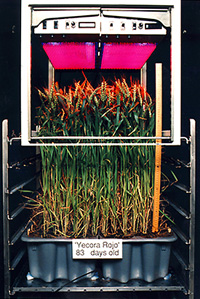
Typical light sources used to expedite plant growth on Earth require too much power and emit too much heat to be a viable solution in extraterrestrial environments. As a result, NASA investigated LED technology, an energy efficient light source that does not emit heat, to see if it positively affected plant growth in space. In the trial, LEDs were used as the photon source to determine whether they could “provide the necessary wavelengths and intensities for photosynthesis” (source: NASA Spinoff). The trials proved successful and a plant growth chamber called Astroculture3 was developed using a LED technology Quantum Devices called High Emissivity Aluminiferous Light-emitting Substrate (HEALS).
Bone and muscle loss as well as slow growth of cells during healing are all issues astronauts face when subjected to the zero gravity of space. The success of the Astroculture3 for plant growth in space led NASA to examine the effects of LED technology on astronaut health. The emerging medical technique Photobiomodulation therapy (PBMT), which utilizes high-intensity light at specific wavelengths, in order to stimulate or inhibit cellular function, was examined using LEDs as the photon energy source. PBMT modulates structures within a cell with “wavelength- specific photon energy to increase respiratory metabolism, reduce the natural inflammatory response, accelerate recovery of injury or stress at the cellular level, and increase circulation” (source:Medical Design Briefs).
Building upon the PBMT technique, Quantum Devices developed the WARP 10 (Warfighter Accelerated Recovery by Photobiomodulation) unit, a handheld, portable device using the same LED-based HEALS technology used in the plant growth experiments. The WARP 10 device was found to deliver the following benefits:
Quantum Devices has made further improvements to the WARP 10 device, now called the WARP 75.

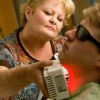
The same HEALS technology using LED as the photon energy source for plant growth in space was further explored as a means of alleviating symptoms associated with cancer treatment. In a two-year clinical trial on cancer patients undergoing bone marrow or stem cell transplants, the WARP 75 device was used to treat a painful side effect of chemotherapy and radiation treatment called oral mucositis. The trial concluded that there was a 96 percent chance that the improvement in pain of those in the high-risk patient group was the result of the HEALS treatment. (source: http://www.nasa.gov).

For this particular use, the handheld WARP 75 device is held near the patient’s left and right cheek and neck area for 88 seconds each, once a day for two weeks. The treatment commences at the beginning of the patient’s bone marrow or stem cell transplant. The light energy provided by the 288 LED chips is equivalent to the light energy 12 suns—for each LED!
LED-based HEALS technology provides the following additional benefits for cancer patients:
• Money savings. The device is less expensive than a day at the hospital.
• Better nutrition. The painful mouth and throat sores associated with oral mucositis makes eating difficult.
• Less narcotic use. Patients do not have to rely on medications to treat oral muscositis.
Quantum Devices is also exploring other medical applications of the device to alleviate symptoms associated with bone atrophy, multiple sclerosis, diabetes, and Parkinson’s disease to name a few.
NASA’s continued research into alternative applications for LEDs is certainly exploiting the versatility of the technology. And it is this versatility and drive for advancement by organizations such as NASA that will see LED technology continue to expand in non-traditional fields and utilized in non-traditional applications. Even within the lighting industry, we are starting to see LEDs with increasingly novel operating characteristics and housed within unique form factors.
So…what’s next?

COPYRIGHT © 2016 LEAPFROGLIGHTING



Sorry, comments are closed for this post.