CALL: 1 (416) 586 3649


A new study from the Lighting Research Center (LRC) at Rensselaer Polytechnic Institute titled “Field Measurements of Light Exposures and Circadian Disruption in Two Populations of Older Adults,” discovered that individuals with Alzheimer’s disease and related dementias (ADRD) illustrate more circadian disruption than in healthy older adults. The study indicates that a 24-hour light therapy program can boost “circadian entrainment”, thereby improving health and well-being of individuals with ADRD. LED lighting technology can provide the color temperature flexibility required as well as application and form-factor flexibility.
First, let’s take a closer look at circadian cycles and what it means if a cycle is disrupted.
Every human being has a “master clock” inside them, and this master clock is synchronized to the 24-hour solar day through light/dark patterns—the main stimulus—on the retina. The light/dark patterns we experience in our daily lives regulate our biological rhythms (awake/asleep). If our circadian cycle is disrupted or becomes irregular, we experience random patterns of sleep and wakefulness throughout the day and night and can become agitated, aggressive, and depressed. Quality of life is reduced and we also run an increased risk of disease.
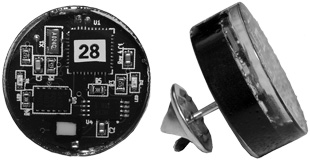
The LRC study funded by the National Institute on Aging (NIA) and led by Associate Professor at Rensselaer and director of the Lighting and Health program at the LRC, Mariana Figueiro, collected circadian light exposures in individuals with ADRD by means of a Dimesimeter device—a dime-sized device that “records how much photopic and circadian light an individual is exposed to and whether they are active or resting”.
Results showed that individuals with ADRD experienced:
After conducting the study and examining 17 others, Figueiro suggests that light therapy is a viable treatment option for those with ADRD, as it can “consolidate rest and activity patterns”.
Figueiro’s proposed 24-hour lighting scheme includes:
a) High circadian stimulation during the day (> 1000 lux at the cornea from a white light source for a minimum of 2 hours). The lighting should be “high, on the task, glare-free with no direct or reflected view of the light source, with softer shadows throughout the space, with balanced illuminance levels, and with good color rendering characteristics”.
b) Low circadian stimulation for 2-hours in the early evening (30 lux at the cornea using narrowband short-wavelength LED blue light).
c) Low circadian stimulation at night (maximum of 60 lux at the cornea from a white light source, such as a 2700K LED).
For all light levels and results, see Table 1 from the study.
The benefits of using a LED lighting scheme
While natural daylight has value, Figueiro points out that daylight levels in a room drop significantly the further one is situated away from the window. Glare is also an issue. LEDs, on the other hand, can emit a wide range of color temperatures to mimic the sun (from approximately 2400K to 6500K) with glare-free properties.
The blue spectrum emitted from LEDs (~470nm) has been proven effective at suppressing melatonin, which improves sleep quality and delays median body temperature peak. According to the research paper “Spectral Sensitivity of the Circadian System” by Figueiro, John D. Bullough, and Mark S. Rea, “light, especially LEDs, can be an important contribution to helping AD patients regulate their circadian functions”.
LEDs also come in various form factors, such as lamps, tubes, panels, and more novel form factors such as strip lighting. The latter, Figueiro suggests, can help to improve postural control and stability, two symptoms of people with ADRD. Figueiro showed in a series of studies that the use of strips of LEDs placed around doorframes help to “decrease sway and reduce weight transfer time compared to having a typical nightlight providing dim lighting in the environment”. The LED strips provide both vertical and horizontal cues.
Furthermore, since Figueiro’s proposal includes a 24-hour lighting scheme, she suggests using energy-efficient LEDs or constraining the implementation to a specific room.
Real-world studies based on Figueiro’s light therapy recommendations are currently being performed at Abe’s Garden, an Alzheimer’s community in Nashville, Tenn.
For further information on the study, see “Light Therapy and Alzheimer’s Disease and Related Dementia: Past, Present, and Future” provided by Abe’s Garden.
To see Figueiro discussing the study and the Dimesemeter in a short, two-minute video provided by the LRC, see The Dimesimeter.

COPYRIGHT © 2016 LEAPFROGLIGHTING



Sorry, comments are closed for this post.