CALL: 1 (416) 586 3649


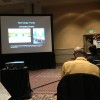
In yesterday’s report we described Lightfair International a “Significant Show Without a Significant Moment.” Not much changes on Day 2 on the floor, although our Leapfrog Lighting team was impressed with some very strong seminars.
It’s worth repeating: lots of activity, plenty of innovation, new manufacturers, great products — but, so far, no breakthrough moment that conference attendees are buzzing. The show continues with record attendance, and is well worth attending, but the main highlight for our Leapfrog Lighting team is an ongoing series of excellent seminars.
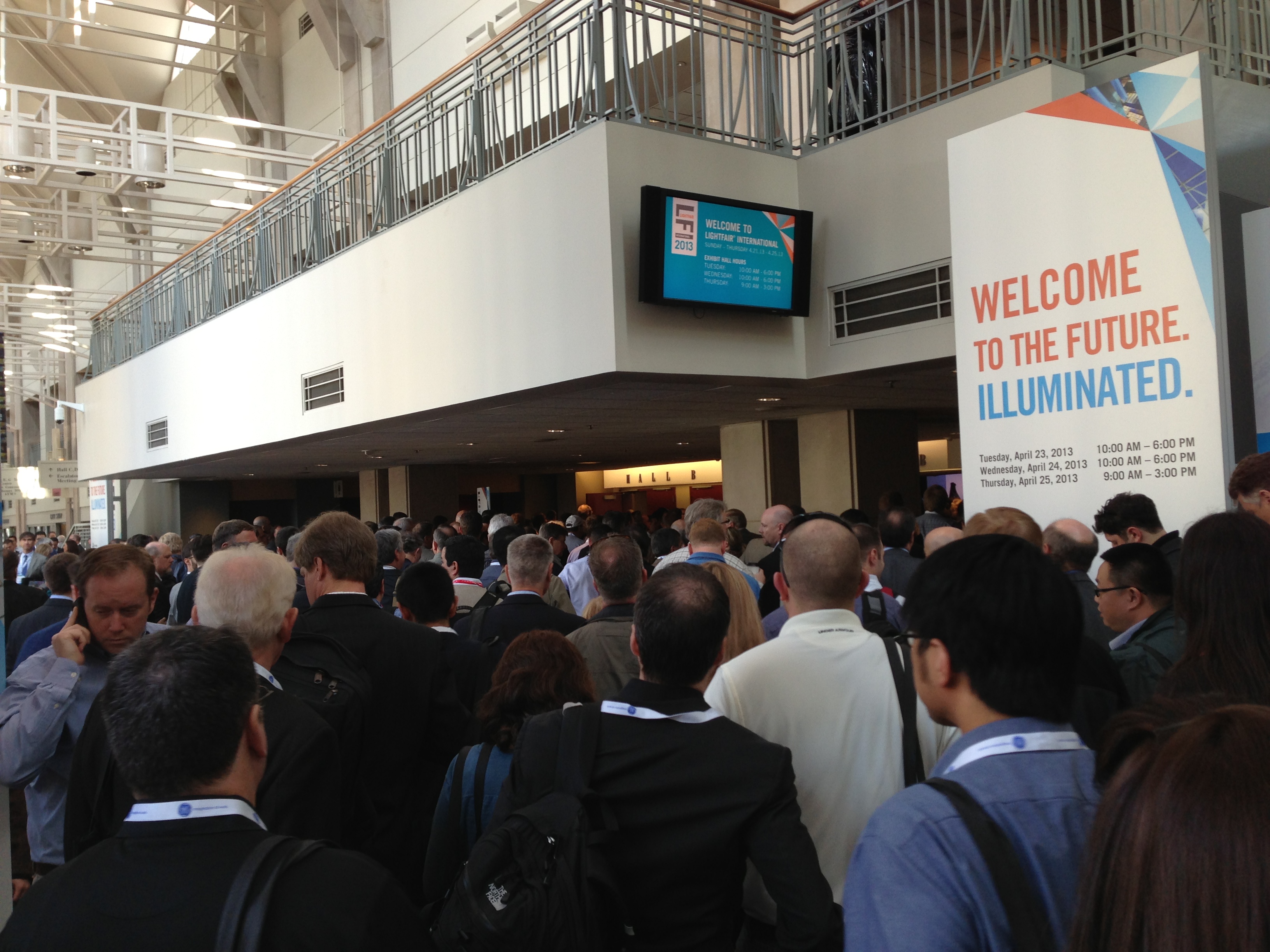
Today we “live Tweet reported” the four seminars we attended. Here are some interesting highlights.
We were keen to attend “Integrating LEDs and Lighting Controls for Increased Energy and Cost Savings in Commercial Interiors”, by Donald Millstein. As we mentioned in our opening day report: “The software focus of the show is new for Lightfair, and lighting control systems and automation played a big role in this area.”
With legislation and building codes focused on efficiency as well as a push for green initiatives, it no surprise that Building Automation Systems (BAS) are on the rise. BAS’s help to “reduce energy cost as well as operation and maintenance costs, improve comfort and productivity of occupants, provide alarms to anticipate issues/complaints, and provide timely information to the facility management team”, said Millstein.
Some of the other Millstein seminar highlights from our Tweet reporting:
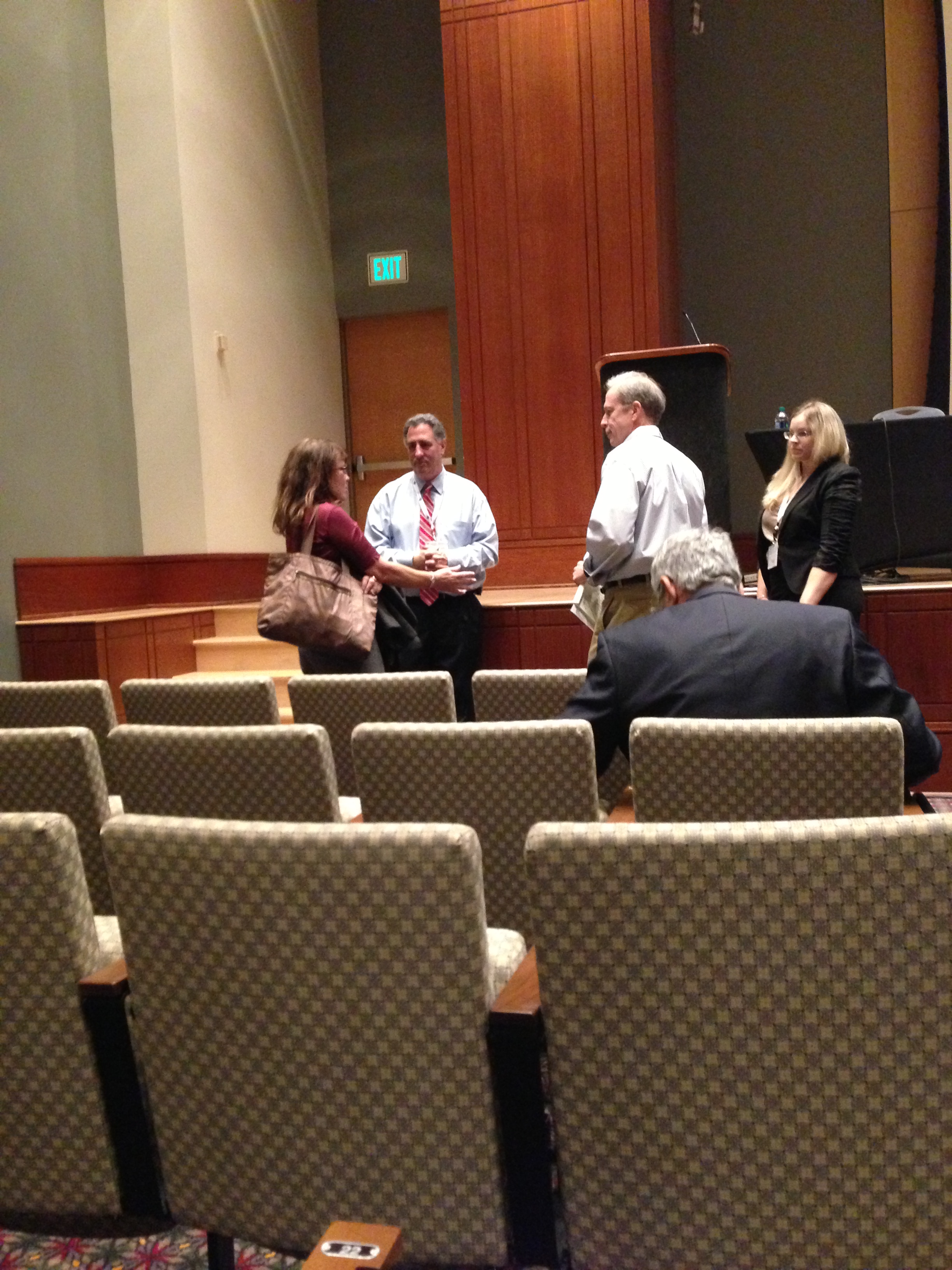
The “Luxurious Luminosity: Shedding Lighting on Hospitality Illumination” seminar by Emlyn Altman illustrated the importance of design. Altman demonstrated how each zone in a hotel—such as the lobby, the guest corridor, meeting rooms and spas—must be treated differently in design terms, since they are expected to generate a different emotion from the patron. “Lighting designs are unique to the type of property, functions of the space, and end-users”, said Altman. Altman discussed both functional lighting, such as ambient and task, and decorative lighting, including dazzle and accent. And as a Canadian company, we were pleased when one of her examples showcased the Hyatt Regency Vancouver hotel lobby in British Columbia. Altman stressed how important LED lighting is becoming to hotels due to their 24/7 application.
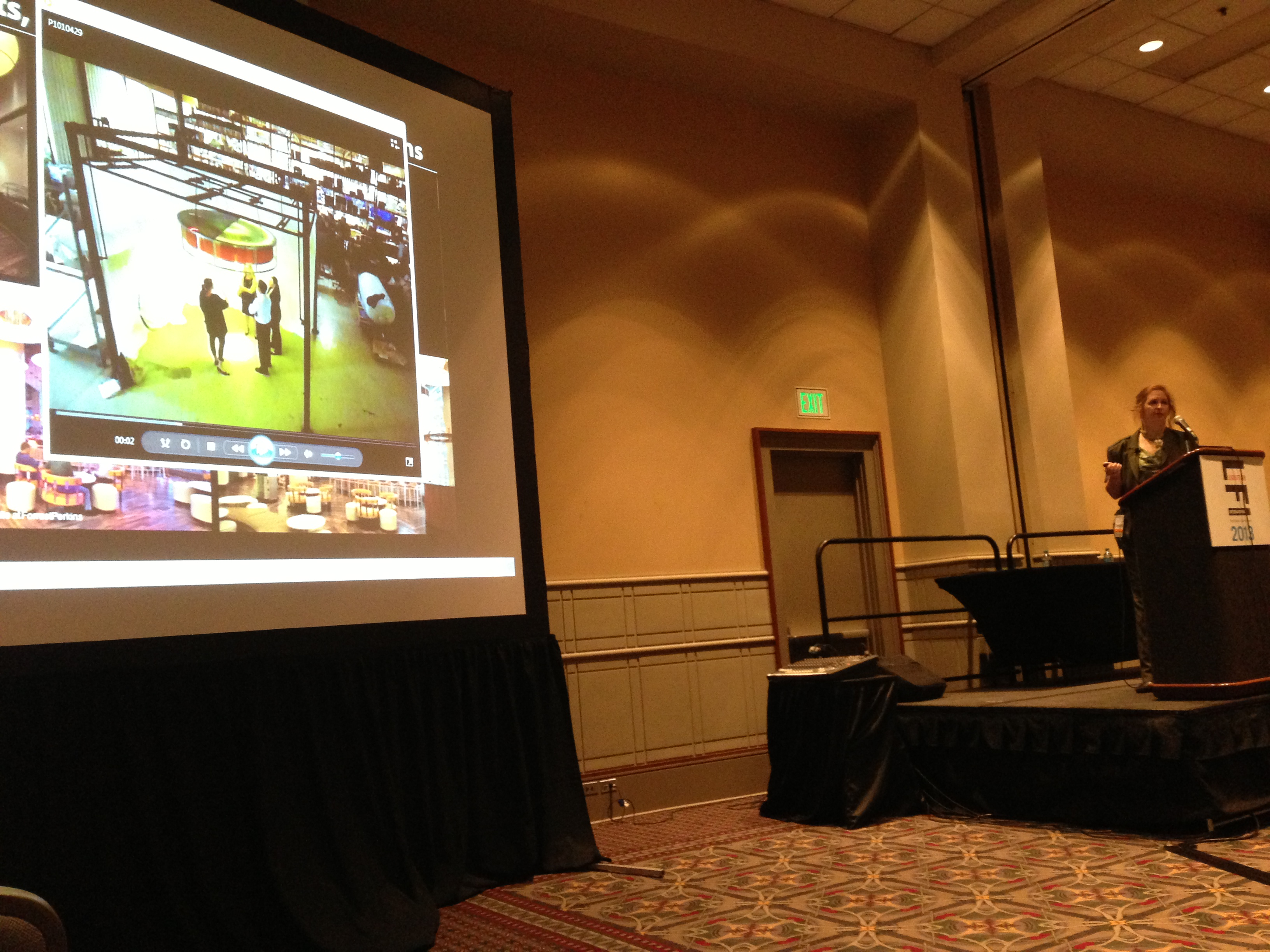
Case study seminars are always engaging. “The Burden Museum: A Case Study of Specifying LEDs and Compatible Dimming”, by Naomi Miller and Janet Lennox Moyer was no exception. Some of our Tweet Report highlights:
Note: For more information on dimming, see our past blog called Are dimmable LED lamps as mythical as unicorns?
Miller and Lennox’s take-aways to making dimming more manageable:
1. Identify the LED product(s) needed for the control group.
2. Add to lighting schedule.
3. Count how many units (and how many watts total) are on that dimming circuit.
4. Check LED product spec sheet for dimming report card (or try dimmer manufacturer for report card).
5. Record the specific dimmer type and range of acceptable units in the dimming schedule.
We also attended “Form Follows Function: How Changing Library Practices are echoed in Design Choices”, by Ardra Paige Zinkon. In this seminar, Zinkon discussed how the 21st century library has changed. While borrowing print books is still important, the digital age has drastically changed the library setting. Lighting designers need to accommodate new areas in libraries, such as computing centers, coffee shops, retail spaces, teen areas, meeting rooms, and more. To follow the central theme we picked up on regarding lighting control systems, Zinkon discussed control strategies for libraries, such as ballast tuning, occupancy sensing, daylight harvesting, controllable window shades, and scheduling via timeclock as a way to make libraries more energy efficient.

In between seminars, we once again took some time to walk the massive Exhibit Hall to examine some of the products of the 500+ vendors present. The exhibition floor remained crowded and the lineups at the door were no smaller than on opening day.
Significantly, this year’s show displayed far more LED finished products and showcased less in the way of LED lighting components or test gear. We recently reported in our blog on light meters, and expected to see light meter manufacturers at the show. We only found two in this space today: Konica’s Minolta Sensing Americas and The Cooke Corporation.
On the floor we definitely noticed a big increase in museum track lighting. The push is on due to the low heat and no UV/IR characteristics of LEDs, making them an ideal choice for galleries or museums—one of the key reasons for conversion as highlighted in “The Burden Museum” LED case study seminar.
We noticed Lighting Services Inc (LSI) of Sony Point New York had developed a track head specifically designed for museums and galleries to keep LED replacement lamps—such as Leapfrog Lighting’s specification-quality LED lamps—even cooler. The product is well-engineered by LSI, a premier specialty lighting manufacturer, and adds flexibility specifically needed by museums and galleries. These innovative features will help an increase speed of adoption in this important niche.
Watch for tomorrow’s reports on Lightfair International, from Leapfrog Lighting Inc.’s correspondents and lighting experts.
Leapfrog Lighting is an innovation leader in LED lamp manufacturing. The current Leapfrog Lighting product line includes MR16, PAR30, PAR38 and PAR20 lamps that provide industry-leading output power through high-efficiency LED source and driver electronics. The innovative lens design creates a pleasing, glare-free light suitable for use in all indoor and unexposed outdoor down-lighting applications. The lamps also deliver the high CRI and ultra-consistent color temperature control critical to multi-lamp applications in hotels, restaurants, schools, office buildings, museums, galleries, retail operations and other public spaces. With a life expectancy of 40,000 operating hours, these UL-registered lamps will provide more than 27 years of service at 4 hours per day.

COPYRIGHT © 2016 LEAPFROGLIGHTING



[…] Philadelphia, PA (PRWEB) May 01, 2013 While Leapfrog Lighting News & Insights reported that there were no obvious breakthrough products at Lightfair 2013—mainly incremental improvements on existing technologies—there was one clear lighting trend at Lightfair 2013, an annual architectural and commercial lighting trade show and conference: the rise of LED lamps as the new conventional lamp. Read our earlier reports here>> […]